Script
$0.142760 words, written to be spoken rather than read.
Read it
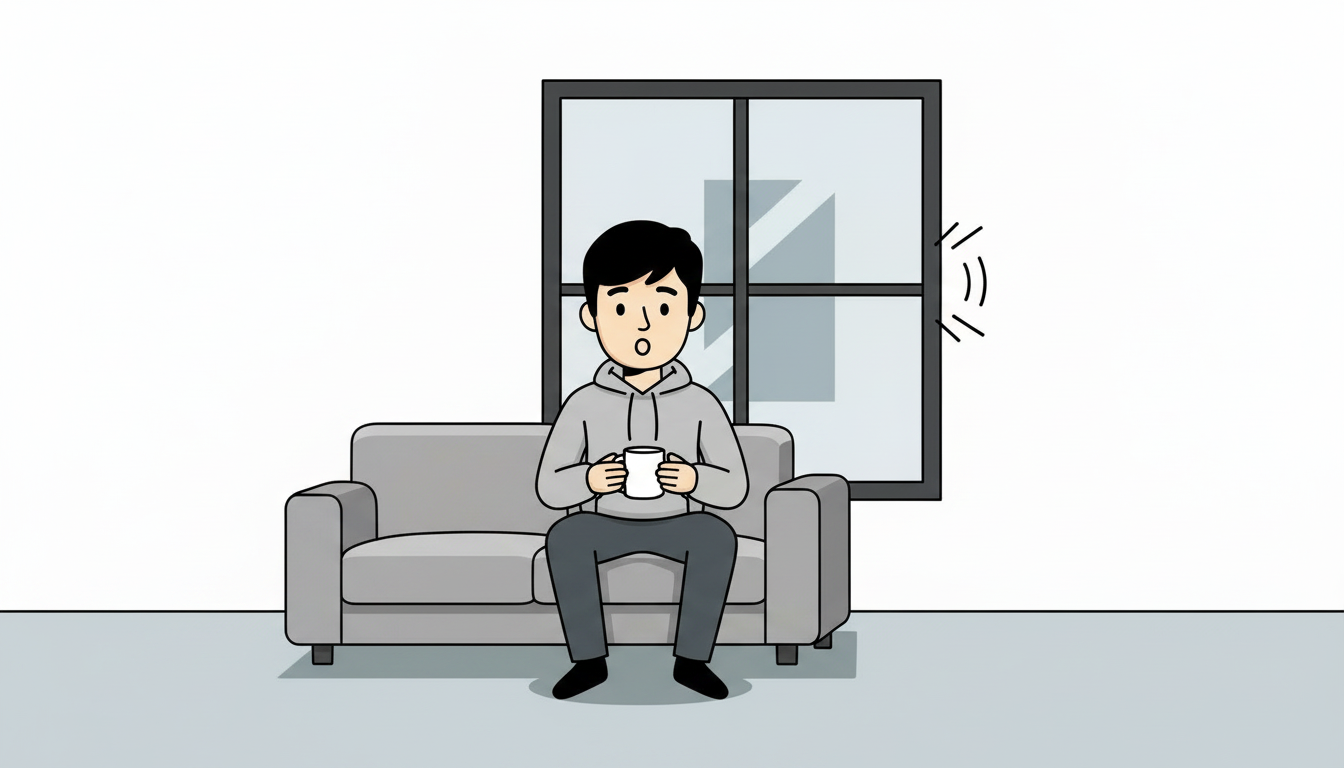
Have you ever been sitting quietly in your living room, enjoying a peaceful afternoon, only to be startled by a bizarre, alien-like clicking sound coming from the window? You look over, and there is your cat. Their eyes are wide, their pupils are dilated to the absolute maximum, their tail is giving that sharp, unmistakable twitch, and their lower jaw is vibrating rapidly. They are staring intensely at a bird or a squirrel outside, making a sound that can only be described as a rapid-fire ek-ek-ek. It is one of the most uniquely strange behaviors our feline friends display. To us, it almost looks like they are trying to talk to the bird. Maybe they are trying to say hello, or maybe they think they can speak bird language to lure their prey closer. But the truth behind this quirky little vocalization is actually much darker, deeply rooted in their evolutionary biology, and incredibly fascinating. That adorable clicking sound is a direct window into the mind of an apex predator. When your sweet, sleepy house cat sits at the window and chatters, they are temporarily disconnecting from their pampered life of soft beds and canned food. In that specific moment, they are transported back to the harsh, unforgiving environments of their wild ancestors. To fully understand why your cat is making this noise, we have to look past the cute exterior and examine the complex intersection of feline anatomy, hunting instincts, neurological pathways, and psychological frustration. First, let us break down exactly what this sound is, because it is entirely unique in the feline vocal repertoire. Cats have a wide variety of sounds, and most of them serve very specific social or survival functions. They meow almost exclusively to communicate with humans, a trait carried over from kittenhood to manipulate our caregiving instincts. They purr to self-soothe, to heal their own bones through frequency vibrations, or to show contentment. They hiss to warn off threats, and they yowl when in distress or seeking a mate. But chattering, which is sometimes called chirping or twittering, is reserved entirely for one highly specific scenario: watching prey they cannot physically reach. The physical mechanism of the chatter involves the cat's mouth opening slightly while the lower jaw vibrates at an incredibly high speed. This is usually accompanied by a soft, breathy vocalization that sounds almost like a stutter. The cat's body language is entirely locked in. They are usually crouched low to the ground in a stalking posture. Their ears are swiveled forward, acting like satellite dishes to capture every rustle of feathers. Their whiskers, which are highly sensitive tactile sensors called vibrissae, are thrust forward to detect minute changes in air currents. Their pupils dilate to let in as much light as possible, allowing their highly specialized retinas to track the rapid, jerky movements of the bird. They are entirely consumed by the hunt, completely ignoring you and everything else in the room. So, what exactly is going on inside their brain? The leading scientific explanation for this behavior is known as the kill bite simulation. To understand this, we need to look at how cats actually take down their prey in the wild, and how their evolutionary lineage has shaped their physical bodies. Unlike wolves or dogs, which are pursuit predators that often run their prey down to exhaustion and attack from various angles as a pack, cats are solitary ambush predators. They rely on absolute stealth, infinite patience, and a sudden, explosive burst of energy to capture their meal. Because they hunt alone, they cannot afford to be injured by struggling prey. The actual act of finishing the hunt requires incredible precision and absolute efficiency. When a cat catches a small animal, like a bird or a mouse, they do not just bite down randomly on a leg or a wing. They instinctively target the back of the neck. Felines have uniquely specialized anatomy for this exact maneuver. Their muzzles are relatively short compared to other carnivores, which gives them a significantly stronger bite force relative to their size. More importantly, their canine teeth are heavily equipped with specialized nerve endings, specifically proprioceptors located in the periodontal ligaments at the root of the teeth. These nerves allow the cat to literally feel exactly where they are biting, sensing the physical structures beneath the prey's skin. When a wild cat bites the back of a bird's neck, they use those incredibly sensitive canines to feel for the slight gap between the cervical vertebrae in the prey's spine. Once they locate that tiny, vulnerable gap, they vibrate their jaw rapidly, sliding their teeth perfectly between the bones to instantly sever the spinal cord. It is a flawless, instantly fatal maneuver that prevents the prey from fighting back, flapping its wings, or biting the cat's face. This specific jaw vibration is a hardwired, genetically inherited muscle memory present in every single domestic cat, from the fiercest barn mouser to the fluffiest indoor Persian. When you see your cat chattering at the window, their brain is being flooded with predatory instincts. They see the bird, and their entire hunting sequence is suddenly activated. The visual stimulus of the prey is so overwhelming that it bypasses their higher reasoning and directly triggers the motor neurons in their jaw. Their body begins to physically simulate the final, lethal bite. They are literally practicing the exact jaw vibration they would use to sever that bird's spine. It is an involuntary reflex triggered by an overwhelming visual stimulus. The sheer excitement of seeing the bird kicks their nervous system into high gear, and that stuttering ek-ek-ek sound is the mechanical byproduct of their jaws vibrating in anticipation of the kill. But the kill bite simulation is only half of the story. The other crucial element driving this behavior is profound, undeniable frustration. The hunting sequence of a cat follows a very specific, biologically ingrained pattern. Behavioral scientists refer to this as a fixed action pattern. It goes: orient, stalk, pounce, grab, and kill bite. This sequence is a fundamental part of what makes a cat a cat. It is how their brain is wired to interact with the world. When your cat is sitting at the window, they are successfully executing the very first step. They are orienting. They lock onto the target. But immediately, they hit an invisible, impenetrable barrier: the window glass. Because of the glass, the sequence is violently interrupted. They cannot stalk forward, they cannot pounce through the air, they cannot grab the bird with their claws, and they certainly cannot deliver that kill bite they are instinctively rehearsing. This barrier creates a massive psychological roadblock. The cat's brain is releasing a massive spike of dopamine, the neurotransmitter associated with anticipation and reward, as well as adrenaline and cortisol to prepare their muscles for the explosive pounce. But they have absolutely zero physical outlet for all of that biological energy. The engine is redlining, but the car is in park. In behavioral science, when an animal has a strong biological drive to perform an action but is physically prevented from doing so, they often engage in what is called a displacement behavior. A displacement behavior is an action performed out of context due to intense frustration, anxiety, or conflicting drives. For humans, this might look like pacing back and forth in a waiting room, biting our fingernails during a scary movie, or tapping our feet rapidly when we are stuck in a terrible traffic jam. We have excess nervous energy that cannot be used for its intended purpose, so it leaks out in repetitive motions. For a cat staring through a pane of glass at a juicy robin, that massive overflow of thwarted energy manifests as a trembling jaw and a rapid clicking sound. The chattering is an involuntary release valve for the intense pressure building up inside their nervous system. Some behaviorists also suggest that the sound is a manifestation of pure adrenaline overflow. The cat is so intensely excited, so completely overwhelmed by the proximity of the prey and their own inability to reach it, that their body literally cannot contain the physical reaction. You will often notice that if the bird suddenly flies away out of sight, the cat is left in a state of high agitation. They might suddenly look around with wide eyes, perhaps aggressively groom a patch of fur on their shoulder for a few frantic seconds, or suddenly bolt across the room at top speed. These are all classic signs of an animal trying to burn off a massive spike of adrenaline that was denied its natural conclusion. The energy has to go somewhere. This brings us to a very important point about household safety and feline psychology. If you notice your cat chattering intensely at the window, it is highly recommended that you do not immediately reach down to pet them or pick them up. In this state, your cat is experiencing severe sensory overload. Their brain is entirely locked into predator mode, and they are practically vibrating with unspent adrenaline. If you suddenly touch them, that pent-up energy and frustration can instantly redirect onto you. This is a well-documented phenomenon known as redirected aggression. Redirected aggression occurs when a cat is highly agitated by a stimulus they cannot reach, such as a bird outside or a stray cat in the yard, and they lash out at the first thing that breaks their focus or touches them. To the cat, it is not a conscious decision to attack their owner; it is a blind, reflexive release of massive tension. The frustration from the window has nowhere to go, so it gets taken out on the nearest moving target, which unfortunately happens to be your hand or your ankle. If your cat is chattering, it is best to let them ride out the wave of excitement, or distract them indirectly rather than touching them. While this chattering behavior is incredibly common and mostly harmless, it is deeply important to recognize what it means for your cat's overall mental state. Keeping a cat indoors is undoubtedly the safest choice. It protects them from speeding cars, larger predators, deadly diseases, and nasty parasites, and it drastically increases their overall lifespan. It also protects the local bird and small mammal populations, as domestic cats are devastatingly effective hunters that have contributed to the decline of numerous wild species. But the indoor environment can sometimes be terribly under-stimulating for a creature whose body and brain are built perfectly for the hunt. That window is essentially Cat Television. It provides brilliant visual stimulation, watching the leaves blow and the animals scurry, but it is ultimately a giant tease. It fires up all their ancient hunting instincts without ever offering the satisfaction of a successful catch. Over time, if a cat is constantly stimulated by prey they can never catch, and they are never given an alternative way to express those hunting instincts, it can lead to chronic stress, lethargy, or behavioral issues around the house. This is why laser pointers, while incredibly popular, can actually be highly problematic for cats. A laser pointer triggers the exact same visual hunting response as the bird outside the window. The cat sees the erratic movement, their instincts fire up, and they chase it. But just like the window, the laser pointer denies them the consummatory phase of the hunt. They can pounce on the red dot all day, but there is never anything physical under their paws. There is no tactile catch, no physical grab, and no bite. It is pure, endless frustration disguised as play, and it can leave a cat feeling incredibly anxious and unfulfilled. So, how can you help your tiny apex predator deal with this frustrating reality? The answer is certainly not to block the windows or pull the blinds, because visual stimulation is still highly beneficial and necessary for indoor cats to prevent boredom. Instead, you need to help them complete that hardwired hunting sequence safely inside the house. You have to provide them with a satisfying conclusion to the biological narrative that the bird outside started. When you see your cat chattering at the window, let them watch for a little while. Let the excitement build. Allow them to enjoy the visual thrill of tracking the prey. But as soon as the bird flies away, or when your cat starts to look agitated and frustrated, immediately step in and offer them a tangible, physical alternative hunting experience. You need to redirect that massive spike of adrenaline into a successful hunt. Grab a wand toy with a feather or a small plush mouse attached to the end of a string. The feather wand is the ultimate tool for mimicking the erratic, unpredictable movements of a bird. But the key is how you use it. Do not just dangle it limply in their face; dead prey is boring prey. Make it act like a real, terrified animal. Hide the toy around corners, drag it slowly behind the sofa, make it flutter rapidly through the air and then land softly on the ground, freezing in place. Make the toy hide from the cat. Let your cat stalk it. Watch as their eyes dilate and their posture drops. Let them wiggle their back end to gain traction on the carpet, and let them pounce. And most importantly, let them catch it. They absolutely need the tactile sensation of grabbing the prey with their sharp claws, wrestling it to the ground, and biting down on it. This physical act is what completes the fixed action pattern of the hunting sequence. It burns off that excess adrenaline, satisfies the biological drive, and allows their nervous system to finally reset and calm down. After a rigorous play session where they have successfully hunted, chased, and killed the feather toy a few times, give them a high-protein treat or serve them their next meal. This perfectly mimics the natural wild cycle of the feline day: hunt, catch, kill, and eat. Following this physical exertion and a full stomach, the cat will almost always engage in a thorough grooming session, followed by a long, deeply satisfied nap. By stepping in and providing this physical outlet, you are taking a moment of deep biological frustration at the window and turning it into a highly enriching, stress-relieving bonding experience for you and your cat. It is also worth noting that not every single cat chatters. Some cats will sit entirely silently at the window, only twitching the very tip of their tail. Others might let out quiet little squeaks or soft trills. Feline behavior is highly individualized, shaped by their unique genetics, their early socialization, and their personal temperament. A lack of chattering does not mean your cat is broken, or that they lack hunting instincts; they just process that visual stimulation differently, or perhaps they have learned over time that the window is an impenetrable barrier and have adjusted their reaction accordingly. But for those cats that do transform into vibrating, clicking little machines, it is a spectacular, unfiltered reminder of their wild origins. So, the next time you are relaxing in your living room and you catch your cat staring out the window, making that bizarre, stuttering ek-ek-ek sound, you will know exactly what is happening beneath the surface. They are not trying to make friends with the local wildlife. They are not talking to the birds, and they are certainly not trying to say hello. They are completely in the grip of millions of years of predatory evolution. They are mentally rehearsing a lethal neck bite, and vibrating with the pure, unadulterated frustration of being separated from their natural prey by a sheet of modern, invisible glass. It is a tiny, hilarious, and slightly terrifying display of the wild predator that sleeps at the foot of your bed every night. It reminds us that no matter how many soft blankets we buy them, or how many cute names we call them, the heart of an ancient, solitary hunter still beats inside their chest. They are perfectly evolved killing machines, temporarily thwarted by modern architecture. If you found this deep dive into the hidden evolutionary science of feline behavior fascinating, please hit that subscribe button for more videos exploring the complex, wonderful, and sometimes bizarre science behind our favorite pets. We love uncovering the wild truths hiding in our living rooms. Thanks for watching, and be sure to give your little apex predator a high-protein treat for us.